
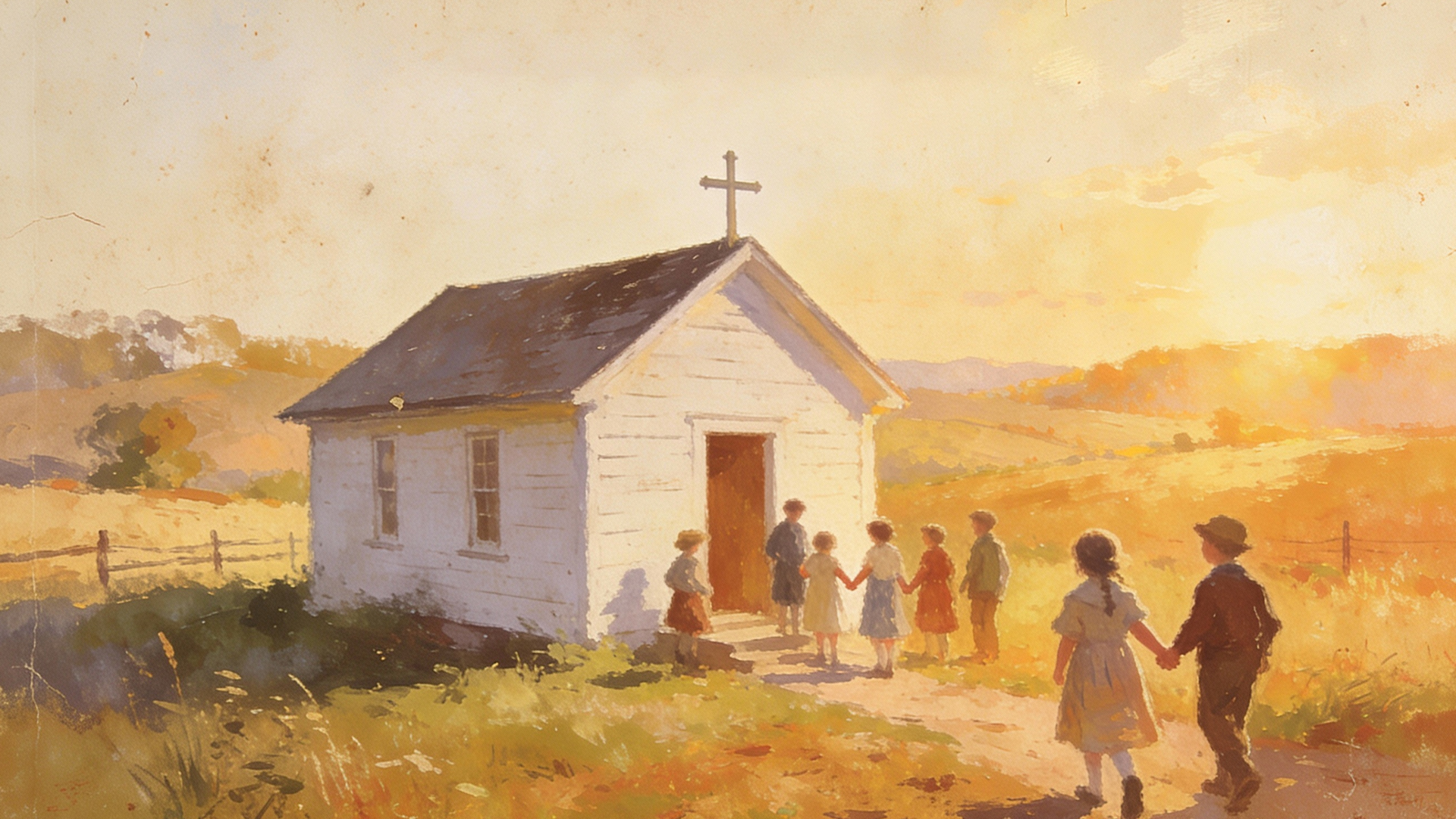
There was a time in America when education was not just about academic progress, but about shaping character. In small towns and rural communities, the one-room schoolhouse stood as more than a building. It was a center of learning, faith, discipline, and shared responsibility. Children of different ages learned side by side, older students helping younger ones, and the entire community taking ownership of the school’s success. While the world has grown more complex, the lessons rooted in those early classrooms may be more relevant now than ever.
Faith as a Moral Foundation
In many one-room schoolhouses, faith was not a political statement or a source of division. It was simply part of life. Children began the day with a prayer, a Bible verse, or a moment of reflection. These practices did not replace education. They supported it by grounding learning in a moral framework.
Faith taught students that knowledge carried responsibility. Right and wrong were not matters of convenience. They were principles to be lived out in daily decisions. This foundation helped children understand accountability beyond rules and grades. They learned that character mattered, even when no one was watching.
As faith faded from shared spaces, it was not replaced by a stronger moral alternative. Instead, many communities lost a common language for values. Without that foundation, education became increasingly transactional, focused on outcomes rather than ethics. The result has been a growing sense of moral confusion, where intelligence thrives but wisdom struggles to keep up.
Sacrifice as a Way of Life
In one-room schoolhouses, sacrifice was not extraordinary. It was expected. Teachers were often underpaid and overworked, yet deeply committed. Students walked miles to school in all weather. Families contributed firewood, supplies, and time to keep the school running. No one asked what they would gain personally. They asked what needed to be done.
Children learned early that life required effort and perseverance. Comfort was not guaranteed, but purpose was. This mindset shaped resilient adults who understood that success came from discipline, patience, and service.
Today, sacrifice is often viewed as loss rather than investment. Discomfort is treated as failure. Yet without sacrifice, communities weaken and character erodes. The lessons learned in those modest classrooms remind us that enduring value often comes through hardship, not avoidance of it.
Community Before Individualism
Perhaps the greatest lesson of the one-room schoolhouse was community. Education was not outsourced to distant systems. It was personal and local. Parents knew the teacher. Neighbors knew the students. Everyone understood that the success of one child benefited the whole community.
Older students learned responsibility by helping younger ones. Younger students learned respect by observing those ahead of them. Discipline was firm but personal, rooted in care rather than punishment. When a child struggled, the community noticed and responded.
Modern society places heavy emphasis on individual achievement. While independence has value, unchecked individualism has weakened social bonds. People are more connected digitally, yet more isolated personally. The one-room schoolhouse model reminds us that progress does not have to come at the expense of belonging.
What We Lost and Why It Matters
The disappearance of one-room schoolhouses was not inherently wrong. Larger schools brought resources, specialization, and opportunity. But in gaining efficiency, America lost intimacy. In standardizing education, it distanced learning from community life.
The loss was not just architectural. It was cultural. Faith became private rather than shared. Sacrifice became optional. Community became fragmented. These shifts did not happen overnight, but their effects are visible in rising loneliness, declining trust, and weakened civic responsibility.
Recovering Forgotten Lessons
America does not need to recreate the past to reclaim its wisdom. The values taught in one-room schoolhouses can exist in modern settings. Faith can once again guide moral reasoning. Sacrifice can be honored rather than avoided. Community can be rebuilt through intentional connection and shared responsibility.
These lessons begin at home, in schools, in neighborhoods, and in daily choices. They require humility and commitment, but they offer something increasingly rare in modern life: meaning.
Conclusion
The one-room schoolhouse was small, simple, and limited in resources, yet rich in purpose. It taught generations of Americans that faith anchors character, sacrifice builds strength, and community sustains life.
As America searches for direction in a divided and restless age, it may find that some of its most valuable answers come not from innovation alone, but from lessons it once lived by and quietly forgot.
America, O’ America, Why? brings these forgotten lessons to life through vivid memories of rural America, one-room schoolhouses, and communities bound together by faith and mutual responsibility. The author’s personal journey shows how these early influences shaped a lifetime of service and invites readers to consider what America lost and what it still has the power to recover.