
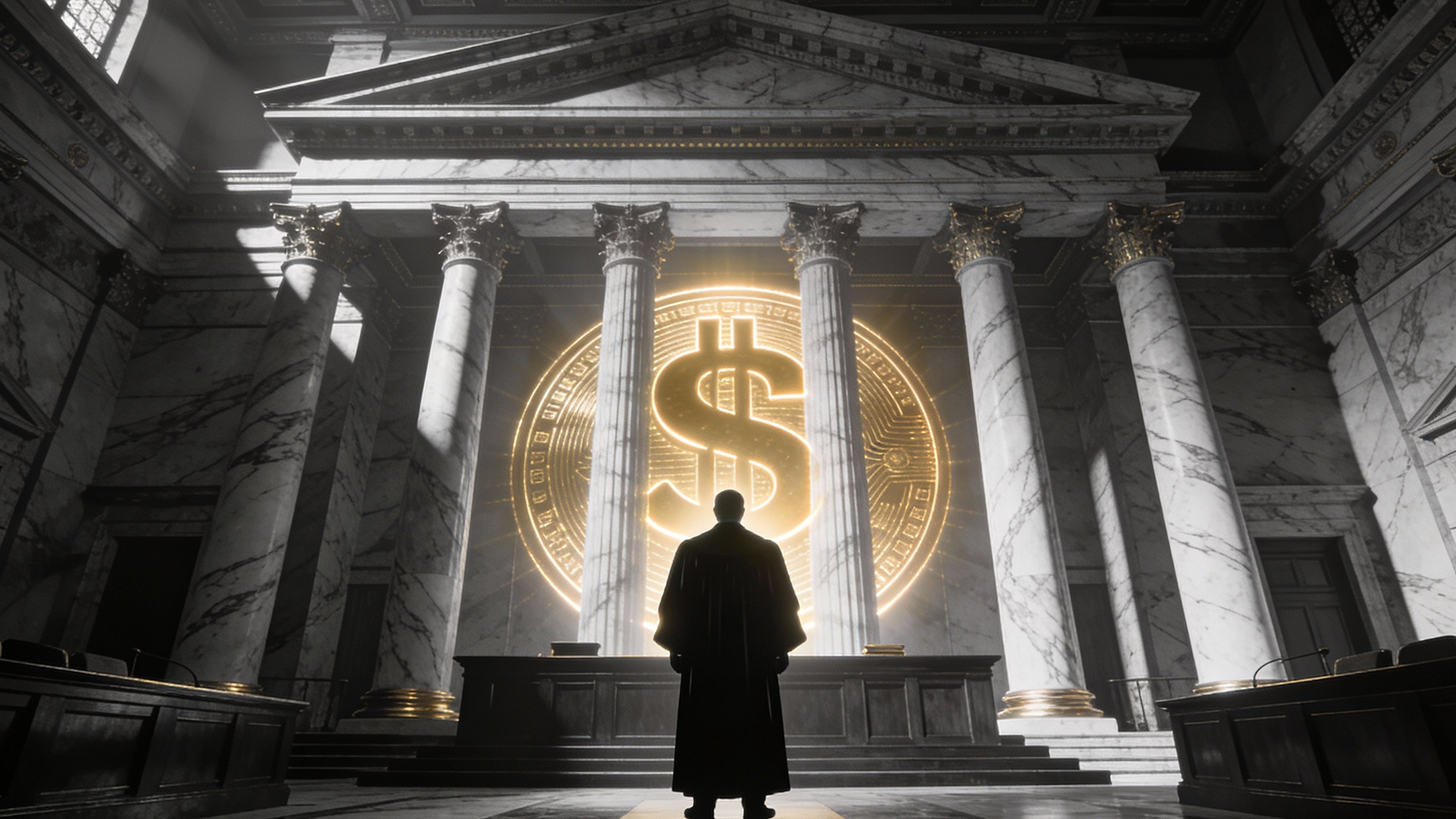
In modern America, success is often measured in dollars. Wealth signals achievement, status, and even moral worth. From corporate boardrooms to social media feeds, money dominates the national imagination. But what happens when the pursuit of money stops being a tool and starts becoming an object of worship? According to one retired federal judge who spent decades observing human behavior from the bench, this shift carries serious consequences, not just for individuals, but for the soul of the nation.
The Quiet Rise of a New God
Money is not evil by nature. It is necessary for survival, stability, and growth. The danger arises when money moves from serving human life to defining it. When financial gain becomes the ultimate goal, other values slowly lose their power. Integrity becomes flexible. Compassion becomes optional. Truth becomes negotiable.
In this environment, people begin to justify actions they once knew were wrong. Greed is reframed as ambition. Exploitation is called efficiency. Personal worth becomes tied to income, and those with less are subtly viewed as less. Over time, money stops being a resource and starts functioning like a god, demanding loyalty, sacrifice, and unquestioned obedience.
A Judge’s View from the Bench
Few people see the long-term effects of this mindset more clearly than a judge. Courtrooms are where private choices eventually become public consequences. Financial desperation fuels crime. Corporate greed leads to fraud. The relentless pursuit of wealth fractures families, destroys trust, and leaves individuals morally hollow.
From years on the bench, the warning becomes clear. When money is elevated above conscience, people begin to lose their moral compass. Laws can restrain behavior, but they cannot restore character. A society driven primarily by profit eventually finds itself overwhelmed by corruption, inequality, and despair.
When Faith Is Replaced by Fortune
Historically, faith has played a central role in shaping moral boundaries in American life. It provided a sense of accountability beyond the self. When faith weakens, something else fills the vacuum. Increasingly, that something is money.
This shift does not always happen loudly. It happens gradually. People stop asking what is right and start asking what pays. Communities stop valuing service and start celebrating accumulation. Even charitable acts are sometimes reduced to tax strategies or branding opportunities. The language of morality is replaced with the language of markets.
The result is not freedom, but anxiety. A life centered on money offers no peace, only constant comparison and fear of loss. No amount of wealth is ever enough, because worshiping money requires endless sacrifice.
The Cost to Human Dignity
One of the greatest casualties of a money-centered culture is human dignity. When profit becomes the highest good, people are easily reduced to numbers, assets, or obstacles. Workers are expendable. The poor are inconvenient. The elderly are costly. The unborn and the disabled are evaluated based on economic usefulness.
This way of thinking corrodes empathy. It trains society to ask whether someone is worth the investment rather than recognizing inherent worth. Over time, this erosion of dignity leads to deep social fractures and a growing sense of alienation.
Judgment Begins Within
The judge’s warning is not only directed at institutions or governments. It is deeply personal. Every individual must ask what truly governs their decisions. Do career choices override family commitments? Does financial security excuse moral compromise? Is success pursued at the expense of honesty or compassion?
A nation does not abandon its values all at once. It happens one decision at a time, one compromise at a time, one rationalization at a time. Cultural decline begins with personal choices.
A Call to Reorder Priorities
The solution is not poverty, nor is it hostility toward success. It is perspective. Money must be placed back in its proper role as a servant, not a master. Faith, whether religious or moral, must reclaim its place as the foundation for decision-making.
When values are rooted in something higher than profit, money becomes a tool for good rather than a source of destruction. It can support families, strengthen communities, and serve justice instead of undermining it.
Conclusion
America stands at a crossroads. The signs of a money-driven culture are everywhere, from widening inequality to moral confusion. The warning from the bench is clear and urgent. When money becomes a god, society pays a heavy price.
The question is not whether America has wealth, but whether wealth has America. Reordering our priorities may be difficult, but it is necessary if the nation hopes to recover its moral balance and preserve its future.
These themes are explored in greater depth in America, O’ America, Why?, where a retired federal judge draws on a lifetime of experience, personal failure, and decades on the bench to examine how the worship of money has reshaped American life. Through firsthand stories and moral reflection, the book offers a sobering warning and a hopeful call to reorder our priorities before the cost becomes irreversible.